Technology
Advancing transformative technologies by curating impact-driven innovators with market-proven solutions and global potential, enabling scale through strategic support, market development, and financing.
Climetric delivers high-performance, climate-responsive dynamic design platform using parametric modelling and simulation that analyzes different scenarios for thermal, energy, daylight, and cost. By testing thousands of design combinations to identify the optimal configuration for comfort, cost, and sustainability, owners can design for efficiency from the start. Applicable for most structures, Climetric has been used in residential, multi-family, commercial, education and hospitalities – and offers a diverse toolkit of sustainable strategies and scalable digital solutions tailored to each project and its uses.
Key Features
Recent Projects
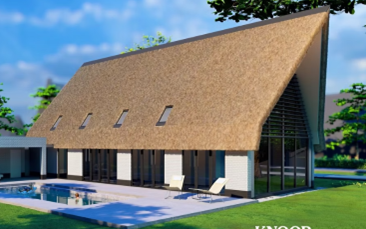
Residential
Maasdriel, The Netherlands
The design by Jasper Knoop features a double-story, fully-glazed facade overlooking the property. Using Climetric, the number of interior climate warm days was reduced from 121 to 36 days, and hot from 21 to 5 days. By using detailed analysis, the stratification of hot air in the room by combined by the room height and separate hot air extract fan significantly improved thermal comfort – without the need for air conditioning. Climetric was able to make this building BENG-compliant (LEED Platinum) with a generic heat pump, without utilizing tight seals.
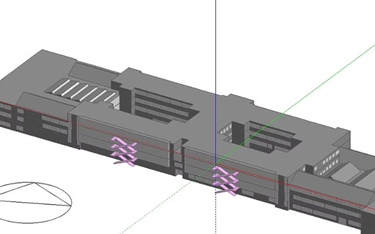
Commercial
Stellenbosch, South Africa, New Civils Building, Stellenbosch University
KHM Architects leveraged Climetric’s advanced data-driven design techniques for the retrofit of Stellenbosch University’s New Civils Building. Using Climetric‘s parametric analysis, potential trouble spots were identified, insight into how various design approaches would affect the comfort experience was provided, giving KHM valuable information to facilitate well-informed design decisions for their clients.
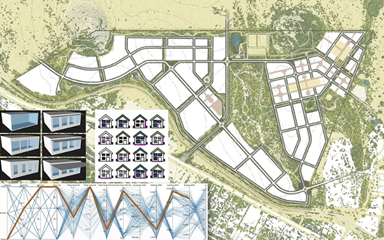
Master Plan
Botswana, Gaborone & Lobatse, Sustainable Urban Planning
Climetric partnered with Gabana Architects create a sustainable urban master plan for a mixed-use project precinct in Gaborone and an industrial precinct in Lobatse. Assisting the Gaborone team by bringing their aspirations of creating a truly sustainable urban developments to life. The sustainability involvement ranges from a high-level global overview masterplan to specialty, parametric Climetric Analysis, providing the design and sustainability compliance model for multiple design variations the developer could choose from.

Born out of TNO—the Netherlands’ premier scientific research institute—Scenexus blends world-class simulation models with gaming-grade computing power to create Urban Strategy, a digital twin platform that enables city leaders to model the future of their cities in real time. Scenexus empowers cities to make better informed decisions that create operational efficiency and support strategic decision support through a simple interface and enables stakeholder engagement and transparency.
This digital twin of planners, engineers, and policymakers test infrastructure projects, mobility systems, housing plans, and climate policies in a matter of minutes—not months. This transforms complex planning cycles into fast, visual, data-rich workflows that deliver measurable impact across mobility, emissions, safety, noise, livability, and environmental outcomes.
Key Features
Recent Projects
San Diego County, United States
Land Use and Transportation Planning
San Diego County developed a cloud-based Digital Twin to support large-scale land use and transportation planning, addressing the challenge of balancing economic growth with a shift toward public transit and cycling. By modeling the interface between the built environment and multimodal transportation systems, the interactive Digital Twin enables more informed planning of roadworks and new infrastructure, helping decision-makers evaluate impacts and guide sustainable mobility strategies.
Amsterdam, Netherlands
Strategic Urban Planning
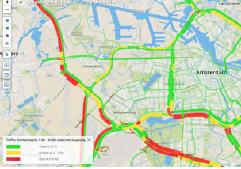
Amsterdam implemented a citywide Digital Twin to support strategic urban planning as growth and densification increased pressure on mobility systems and the environment. Using an urban strategy approach, the city jointly assessed, monitored, and evaluated complex interventions, enabling data-driven decisions across multiple use cases. The result is continuous support for urban redevelopment while preserving accessibility, environmental quality, and overall livability within the city’s limited boundaries.
Singapore, Asia
Bus Electrification Strategies
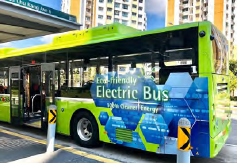
Singapore is using a Digital Twin to support the full electrification of its 6,000-bus fleet by 2040, addressing the complexity of charging infrastructure, routing, weather impacts, and operational constraints. The tailored tool enables the Land Transport Authority (LTA) to run what-if scenarios and assess deployment strategies, serving as a central decision-making instrument for planning and scaling electric bus operations.